TripDAWG, Uncategorized
Every year, CVSA Roadcheck brings increased enforcement attention. As a result, fleets quickly see where they are strong and where they need improvement.
For CVSA Roadcheck 2026, ELD tampering is a key focus. Because of this, fleets must ensure their data is accurate and their drivers understand proper usage.
So, what does that mean in practice? More importantly, how can your fleet prepare without adding complexity?
What Is CVSA Roadcheck 2026?
CVSA Roadcheck 2026 is a 72-hour inspection event led by the Commercial Vehicle Safety Alliance. During this time, inspectors across North America conduct roadside checks on drivers and vehicles.
Each year, enforcement highlights a specific focus area. In 2026, inspectors will pay closer attention to ELD usage and potential tampering.
Specifically, they will review:
- Hours of Service (HOS) accuracy
- Proper use of ELD devices
- Signs of incomplete or incorrect records
Although these are not new rules, enforcement becomes stricter during this period. Therefore, even small inconsistencies can lead to violations.
Understanding ELD Tampering Risks
ELD tampering does not always involve intentional misuse. In many cases, it results from incorrect processes or lack of training.
For example, common issues include:
- Incorrect log edits
- Misuse of personal conveyance
- Unrecorded driving time
- Misunderstanding how the system works
Even so, enforcement focuses on accuracy rather than intent. If records do not reflect actual activity, fleets may face violations.
Why Accuracy Matters More Than Intent
Inspectors do not evaluate intent during roadside checks. Instead, they focus on whether logs match real-world activity.
Because of this, small errors can quickly become compliance issues. Therefore, consistent and accurate usage is critical.
Learn how to improve ELD accuracy with TripDawg.
What Is Geotab and How It Supports Compliance
Many fleets ask how to strengthen compliance before Roadcheck. As a result, tools like Geotab often come up in the conversation.
Geotab is a telematics and ELD platform that helps fleets track:
- Hours of Service
- Vehicle movement
- Driver behavior
- Compliance data
However, its value goes beyond basic tracking.
Using Telematics for Better Visibility
When used effectively, telematics systems provide real-time insights.
For example, fleets can:
- Monitor driver activity
- Identify compliance risks early
- Improve safety and efficiency
However, the key is not just having the tool. Instead, success depends on how consistently teams use it.

How to Prepare for Roadcheck Without Overcomplicating It
Preparation does not need to feel overwhelming. In fact, the most successful fleets focus on consistency rather than last-minute fixes.
First, start with driver training.
Drivers should understand:
- How to use ELD devices correctly
- When and how to edit logs
- What compliance expectations look like
Next, focus on visibility.
Ask yourself:
- Are logs reviewed regularly?
- Are issues identified early?
- Are inconsistencies flagged automatically?
Finally, evaluate your technology.
An effective system should be:
- Easy for drivers to use
- Simple for administrators to review
- Built to provide actionable insights
Building Compliance Beyond Roadcheck
Although Roadcheck lasts only 72 hours, compliance is a year-round responsibility.
Therefore, fleets that perform well during inspections typically:
- Invest in ongoing driver training
- Use ELD data proactively
- Work with reliable technology partners
- Continuously improve their processes
Because of this, preparation becomes part of daily operations rather than a one-time effort.
Turning Data Into Action
Data alone does not improve compliance. Instead, teams must use it to drive decisions.
For example, fleets can:
- Identify trends in driver behavior
- Address risks before violations occur
- Improve long-term performance
Explore how to get more value from your data.
Are You Ready for CVSA Roadcheck 2026?
If your fleet had an inspection today, would your data be accurate and complete?
Instead of reacting during Roadcheck, strong fleets prepare in advance. As a result, they approach inspections with confidence rather than uncertainty.
Final Thoughts on CVSA Roadcheck 2026
ELD compliance is not new. However, CVSA Roadcheck 2026 highlights the importance of accuracy and consistency.
The good news is that preparation does not require more work. Instead, it requires better systems and habits.
Focus on:
- Training drivers effectively
- Using the right tools
- Reviewing data consistently
When these elements are in place, compliance becomes easier to manage.
Connect with our team to prepare your fleet for Roadcheck and beyond.

Uncategorized
If you have been searching for a DOT compliance consultant, something probably is not working the way it should. Maybe renewals are harder to track than they should be. Maybe you are not confident everything is covered. Or maybe your current system just is not keeping up anymore.
There is no one-size-fits-all answer — but there is a right fit depending on how you want to run your fleet.
Here are the four most common approaches to fleet compliance solutions, including where each one tends to succeed and where it tends to fall short.
Option 1: Full-Service DOT Compliance Consultant
For many fleets, hiring a consultant feels like the easiest path. Registrations, filings, renewals — all of it gets handed off to a third party. In some cases, this works well, especially for fleets that do not want to manage compliance internally.
Over time, though, a few common challenges tend to surface.
The biggest one is visibility. When everything lives with your consultant, real-time information is hard to access. You may not know what has been filed, what is coming due, or where things stand until you ask — and when you do ask, you are waiting on someone else to respond.
Control becomes limited. Checks and balances become harder to verify. And your compliance process can start to feel like a black box.
Takeaway: Full-service consulting can reduce workload, but it can also reduce visibility and control.

Option 2: Spreadsheets, Outlook Reminders, and Paper Files
On the opposite end of the spectrum is the fully internal approach. Everything is tracked in spreadsheets. Reminders are set in Outlook. Documents are stored in folders — physical or digital.
This works until it does not.
At a certain scale, things start to break down. A renewal gets missed because a reminder did not fire. A document gets lost or saved in the wrong folder. There is no clear audit trail showing what was done and when.
Every update, every check, and every follow-up depends on someone remembering to do it. That is not a system — that is reliance on people.
Takeaway: Manual systems can work early on, but they do not scale and they leave too much room for error.
Option 3: Fleet Compliance Software
This is where many fleets are moving today. Instead of relying on memory or outsourcing everything, they are building systems that provide visibility and control without adding complexity.
With a solution like [GW Connect], everything lives in one place. You can see your entire fleet across multiple DOT numbers, upcoming renewals and deadlines, missing registrations or documentation, and potential issues with tax filings.
Instead of manually tracking everything, the system does the heavy lifting. Reminders are automated. Workflows are structured. And your compliance status is visible in real time.
What makes the difference is not just the technology — it is the foundation behind it. GW Connect is built by industry professionals with over 25 years of DOT fleet compliance and safety experience, which means it reflects how compliance actually works in the real world.
Takeaway: Software solutions create visibility, automate processes, and give you control without relying on memory or outside dependency.
Option 4: The Hybrid Approach — Software Plus a DOT Compliance Consultant
For many fleets, this ends up being the sweet spot.
You get the structure and visibility of a software platform combined with the expertise of a DOT compliance consultant when you need it. Instead of handing everything off, you stay in control of your system. You can see what is happening, track compliance in real time, and rely on automation to handle the day-to-day work.
Utilizing GW Connect and VLC’s team of DOT Compliance and Fleet registration experts, can provide the visibility fleets want with that helping hand when needed.
When questions come up or when you need support, experienced consultants are still accessible. The difference is that they are supporting your system — not replacing it. There is no locked gate, no waiting for updates, and no loss of visibility.
Takeaway: The hybrid model combines control and expertise, giving you the best of both without the trade-offs.
Which Option Is Right for Your Fleet?
It comes down to one question: how much control do you want over your fleet’s compliance?
If you are comfortable handing everything off and not seeing the details, a full-service consultant might work. If your operation is small and manageable, spreadsheets might get you by for now.
But if you are looking for visibility across your entire fleet, confidence that nothing is being missed, automation that reduces manual work, and access to real industry expertise, a software-driven or hybrid approach is usually the better long-term fit.
Final Thoughts on Fleet Compliance
Compliance is not just about getting things done. It is about knowing — at any given moment — where your fleet stands.
That is hard to do when you cannot see the full picture, when you are relying on manual processes, or when everything is sitting with someone else.
Ask yourself:
- Do you want more control over your fleet?
- Are manual reminders causing problems?
- Are you confident nothing is being missed?
- Or are you constantly double-checking just to be sure?
If any of those hit home, it may be time to rethink your approach.
If you are ready to explore a better way to manage compliance — with visibility, automation, and expert support — connect with the VLC team.

Uncategorized
Operating a commercial vehicle in California requires more than a federal DOT number. A California Motor Carrier Permit is one of the most important compliance requirements for carriers operating in the state, and getting it wrong can stop your trucks from moving entirely.
California has some of the most complex motor carrier regulations in the country. Furthermore, with increased scrutiny around non-domiciled carriers and CARB compliance, getting it right the first time has never been more critical.
What Is a California Motor Carrier Permit?
A California Motor Carrier Permit, commonly referred to as an MCP, is required for most motor carriers operating commercial motor vehicles in California. Specifically, you likely need an MCP if you transport property in California, operate vehicles over 10,000 pounds GVWR, use commercial vehicles for hire, or operate intrastate within California.
It is important to note that a USDOT number does not replace the California Motor Carrier Permit requirement. Even carriers with an active federal DOT number must obtain an MCP before operating legally in the state.

Do You Need a CA Number If You Already Have a DOT Number?
This is one of the most common questions fleets ask, and the answer is yes. Your USDOT number is a federal identifier. Your CA number is a California-specific identification number, and the two serve different purposes.
If you operate intrastate in California, a CA number must be obtained before your MCP application can move forward. Many carriers assume their DOT number alone is sufficient. Unfortunately, that assumption leads to delayed applications and outright rejections.
The Most Common California Motor Carrier Permit Mistakes
Fleets make the same errors repeatedly when applying for a California MCP. Understanding these mistakes in advance can save significant time and prevent costly delays.
Confusing Expiring and Non-Expiring Permits
California MCPs are issued as either one-year expiring permits or non-expiring permits. Carriers often assume that a non-expiring permit requires no ongoing maintenance. That assumption is incorrect.
Insurance filings, workers’ compensation coverage, and compliance status must remain active at all times. If any of these lapse, your permit can be suspended even if it does not expire annually.
Not Securing a CA Number First
Your CA number must be issued before your MCP application can move forward. Submitting incomplete documentation or skipping this step delays the process and can affect your ability to operate legally in California.
Skipping EPN Account Enrollment
California requires motor carriers to enroll in the Employer Pull Notice program, known as EPN, through the DMV. The EPN system monitors driver license status and notifies employers of suspensions or updates. Enrollment is mandatory. Failure to establish and maintain an EPN account can directly jeopardize your MCP.
Overlooking Insurance Filing Requirements
Your insurance provider must file the correct forms with the California DMV. Incorrect or delayed filings are among the most common causes of permit suspension. Therefore, confirming that your provider has filed correctly is an essential step in the process.

California Is Tightening Enforcement for Motor Carriers
Operating in California has always required navigating stricter rules than most other states. Recently, however, the compliance environment has become even more demanding in two specific areas.
Non-Domiciled Carrier Regulations
California has increased scrutiny on carriers operating within the state without proper registration or domicile documentation. If your company is based out of state but operates in California, compliance requirements become significantly more critical to manage correctly.
CARB Compliance Regulations
The California Air Resources Board, known as CARB, enforces emissions compliance rules that affect commercial vehicles operating in the state. CARB non-compliance can prevent registration, block renewals, lead to penalties, and delay operations. When CARB issues intersect with MCP or registration filings, the result creates additional obstacles for fleets trying to stay operational.
Read our CARB compliance blog.
Why California Compliance Feels So Complex
California motor carrier compliance is not just one requirement. Instead, it is the layering of multiple obligations that must all be active simultaneously. Federal DOT compliance, CA number requirements, MCP filings, EPN enrollment, insurance filings, CARB regulations, and ongoing monitoring all apply at once.
One missing piece can stop the entire process. And when a permit is delayed or suspended, your trucks do not move.
Frequently Asked Questions About California Motor Carrier Permits
How long does it take to get a California Motor Carrier Permit? Processing times vary. However, incomplete applications significantly delay approval and should be avoided at all costs.
Can I operate in California without an MCP? No. If you meet the criteria requiring an MCP, operating without one can result in citations and enforcement action.
Does a USDOT number cover California intrastate operations? No. Intrastate operations in California typically require both a CA number and an MCP.
What happens if my California MCP is suspended? Your authority to operate can be revoked until all compliance issues are fully resolved.
Get Your California Motor Carrier Permit Right the First Time
California compliance is not impossible, but it does require precision. Understanding when you need a CA number, which MCP category applies to your operation, how to maintain EPN enrollment, and how CARB compliance affects your registration are all essential pieces of the process.
At Vehicle Licensing Consultants, we have spent over 25 years helping carriers navigate California motor carrier permits, DOT numbers, and state-specific regulations. If you need help determining whether you need an MCP, how to apply for a CA number, why your MCP was denied or suspended, or how CARB regulations may affect your fleet, our team can walk you through the process clearly and correctly.
Because in California, compliance is not optional. And guessing is not worth the risk.
Check out our MCP guide : https://im4trux.com/resources/

TripDAWG
The FMCSA has released the top five vehicle inspection violations of 2025, and they carry a clear message for fleets for the rest of 2026. None of these FMCSA vehicle inspection violations involve complicated mechanical failures. In fact, every single one should be caught during a proper pre-trip or post-trip inspection.
So why do they continue to top the list year after year?
The Top 5 FMCSA Vehicle Inspection Violations of 2025
According to FMCSA data, the five most cited vehicle inspection violations of 2025 are missing periodic inspection paperwork, brakes out of adjustment, required lights not working, tires leaking or underinflated, and identification lights not working.
These are not hidden defects. They are visible, preventable, and fixable issues that drivers encounter every day. As a result, the real question is not whether drivers know about them. The real question is why they are still happening.

Why Aren’t Drivers Completing DVIRs Properly?
A question fleets frequently ask is whether drivers are required to complete a DVIR after each trip. Under FMCSA regulations, drivers must complete a Driver Vehicle Inspection Report at the end of each day’s work when a defect is found. Furthermore, fleets must ensure all identified issues are corrected before the vehicle operates again.
Even when no defects are present, a thorough pre-trip inspection remains critical. It is the frontline defense against out-of-service violations.
The data tells us something important: the issue is not awareness. It is execution.
Learn more about The TripDawg difference for Fleet Management.
Why Drivers Rush Through Inspections
Drivers are not skipping inspections because they are indifferent to safety. Instead, they are managing competing pressures every day. Delivering freight on time, staying within hours of service limits, keeping dispatch satisfied, and managing tight schedules all demand attention simultaneously.
When the technology required for DVIRs is slow, outdated, or buried inside a clunky workflow, inspections become something drivers click through rather than actually perform. As a result, compliance becomes a box to check rather than a habit to build.
When DVIRs turn into rushed taps on a screen, small defects go unnoticed. Those defects then become roadside violations. Moreover, those violations lead to out-of-service events, increased SMS scores, higher insurance premiums, and lost revenue from parked equipment.
What Makes a Good DVIR Solution?
Fleets actively searching for DVIR solutions should look for specific qualities before making a decision. A good DVIR solution is fast and intuitive, mobile-friendly, easy to complete in minutes, integrated with existing fleet technology, clear about required steps, and designed with the driver experience in mind.
If drivers dread opening the inspection app, that is a clear warning sign. If safety managers spend hours chasing incomplete inspections, that is another. A driver-friendly platform increases completion rates, improves inspection quality, and reduces preventable FMCSA vehicle inspection violations.
DVIRs Are Part of a Larger Fleet Technology Ecosystem
DVIRs do not exist in isolation. Instead, they function as one part of a larger driver technology ecosystem that includes ELD, telematics, messaging, safety cameras, and compliance workflows. When those tools do not work together, or worse, frustrate drivers, the breakdown shows up directly in inspection data.
Fleets that succeed in 2026 will not simply be compliant. They will be strategic. They will understand that compliance improves when drivers have tools that support their workflow rather than slow it down.
Every 2025 Violation Was Preventable
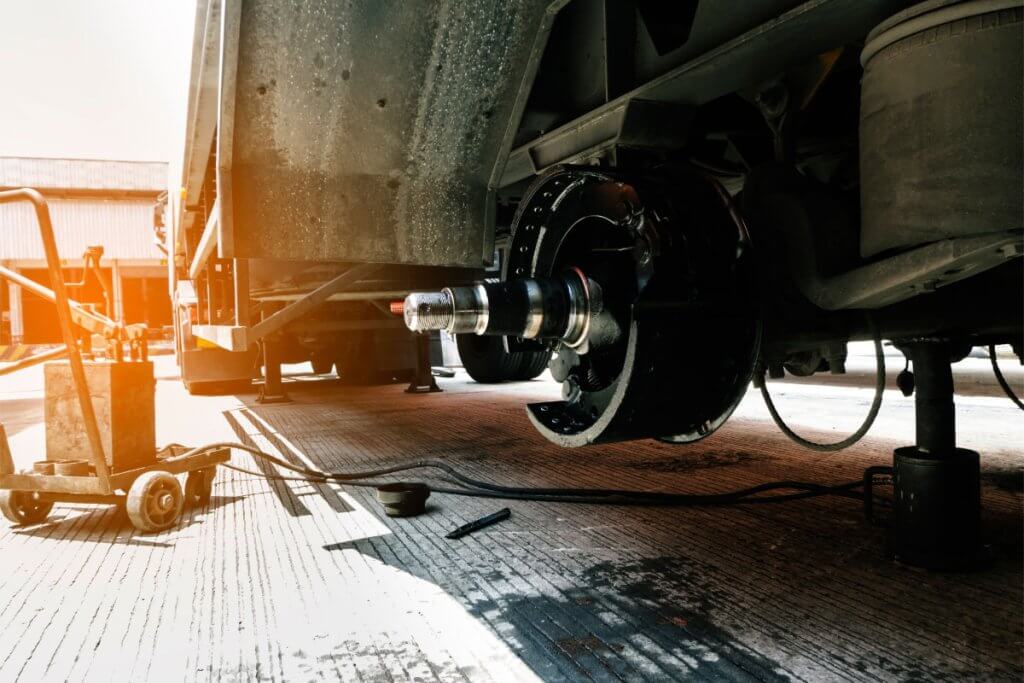
Looking at the top five violations again makes the opportunity for improvement clear. Missing periodic inspection paperwork is a documentation tracking issue. Brakes out of adjustment are detectable during a standard inspection. Required lights not working are visible before departure. Tires leaking or underinflated are measurable in seconds. Identification lights not working are easily identified during a walkaround.
Every one of these issues can be caught during a thorough pre-trip and post-trip DVIR. As a result, the path to improvement is not mechanical. It is behavioral and technological.
How to Reduce FMCSA Vehicle Inspection Violations in 2026
If drivers rush through inspections because the process feels like friction, discipline alone will not solve the problem. Better systems will. Driver-friendly technology reduces skipped steps. Integrated platforms reduce double data entry. Clear workflows increase accountability across the fleet.
When compliance feels seamless, it actually happens consistently.
Build a Fleet Technology Stack That Works for Your Drivers
At TripDAWG, we believe safety and compliance should feel natural, not forced. Working with a driver-friendly DVIR solution and an integrated fleet technology stack is critical to long-term success.
If your inspection data shows gaps, if your drivers are rushing through reports, or if your safety managers are spending too much time correcting preventable issues, it may be time to rethink your tools. Our team of fleet technology specialists can help you build a solution that meets the needs of your safety managers and the drivers who rely on it every day.
Because when compliance is easy, your fleet stays moving.
Gateway Connect
Most fleets do not get parked because of one catastrophic event. Instead, they get parked because something small was missed. Fleet vehicle data tracking is what stands between your operation and those costly surprises.
An expired registration, a forgotten IFTA renewal, a maintenance file that was not documented correctly, or a violation that quietly pushed an SMS score in the wrong direction — each of these is preventable. Tracking vehicle data is not about spreadsheets. It is about visibility.
Fleet Vehicle Data Tracking Starts With Maintenance
Maintenance is one of the most overlooked and most important parts of fleet compliance. Federal regulations require carriers to systematically inspect, repair, and maintain all commercial motor vehicles. Beyond that, preventative maintenance protects your uptime, your drivers, and your reputation.
A missed inspection or undocumented repair can lead to roadside violations. When enough violations accumulate, your Safety Measurement System score begins trending upward. Once that happens, insurance companies and shippers take notice.
A common question fleets ask is whether maintenance files must be kept for audits. The answer is yes. Every vehicle under your control requires documented inspection, repair, and maintenance records. If documentation cannot be produced during an audit, it does not matter how well the truck was maintained. It can still count against you.
The challenge is not doing the maintenance. It is tracking it consistently.
IFTA Reporting: Small Errors Lead to Big Consequences
Fuel tax reporting feels administrative until it turns into an audit. If your vehicles travel across state lines and meet weight or axle requirements, your fleet likely falls under the International Fuel Tax Agreement, commonly known as IFTA.
Fleets frequently ask whether IFTA is required for their trucks. If you operate interstate and your qualified vehicles exceed 26,000 pounds or have three or more axles, the answer is typically yes.
Where fleets run into trouble is not the filing itself. It is the data behind it. Mileage does not match fuel receipts, systems do not communicate with each other, and manual spreadsheets introduce errors. When numbers do not align, your fleet is exposed to IFTA audits, penalties, back taxes, and unwanted regulatory scrutiny.
With GW Connect… take the guesswork out of fuel tax filing.
IRP vs. Regular Registration: Why the Difference Matters
Registration mistakes can shut a truck down instantly. Furthermore, using the wrong registration type for your operation can result in fines or an out-of-service order.
If you operate across multiple states, you likely need IRP, or International Registration Plan, registration. If you operate within a single state, regular registration may apply. In California, qualifying fleets may also encounter PFR, known as Permanent Fleet Registration, as an additional option.
IRP allows apportioned registration across multiple jurisdictions, with fees based on where you operate. Regular state registration applies to intrastate-only operations. The distinction matters, and getting it wrong has real consequences.
Registration renewals are not complicated on their own. Missing them, however, is a problem that is entirely avoidable with the right tracking system in place.
GW Connect is Software for Multi-State Fleets – managing IRP registration and renewals.
How Vehicle Data Tracking Protects Your SMS Score
Your vehicle data does not exist in a vacuum. Maintenance violations, registration issues, and roadside inspections all feed directly into your SMS score. That score influences insurance rates, audit likelihood, and your ability to win new business.
A high SMS score is rarely caused by one major event. It is most often the result of small compliance gaps stacking up over time. When maintenance schedules slip, documentation falls out of order, or permits expire quietly, violations follow. And once violations occur, the ripple effect across your operation begins.
Consistent fleet vehicle data tracking reduces those preventable hits before they ever appear in the system.
The Bigger Picture: Keep Your Fleet Moving
Fleet compliance is not about reacting when something goes wrong. Instead, it is about knowing what is due, what is expiring, what is incomplete, and what could cause downtime next month.
When everything lives in separate spreadsheets, inboxes, or filing cabinets, small issues become easy to miss. And small issues turn into parked equipment.
GW Connect brings asset management, registrations, permits, and maintenance tracking into one clear view. Instead of chasing paperwork, your team gains confidence that your fleet is prepared and compliant at all times.
Because what really matters is not just tracking vehicles. It is keeping them moving.
Ready to learn more about how GW Connect can help? Schedule a demo!