Electronic Logging
HOS violations can be costly to your organization. Your driver is placed out of service causing a ripple effect through your driver team and delays with your deliveries. Not to mention the fines, which can be significant.
Let’s take a look at the top 6 violations and see how Geotab can reduce or eliminate them from your fleet:
Wrong Class License
Ensure your divers have the proper license for their vehicle and trailer. Keep medical updates current and set reminders around licenses.
Vehicle Out of Service
Keep brakes, tires, and lights in proper working order to avoid road check violations. Cargo securement is another common violation that can put your vehicle OOS. Preventative maintenance is an excellent way to avoid these issues, replacing or repairing before problems occur. It’s also a great way to keep your drivers and equipment safe.
Driving Beyond Time
The 14-Hour and 11-Hour Rules are in place for everyone’s safety. Be sure that your drivers are informed about the HOS requirements.
Outdated Logs
Your Geotab ELD can avoid the risk of receiving this violation. Make sure your drivers actively update their change in duty status so that your logs are current and accurate at all times.
Compliance Review Violations
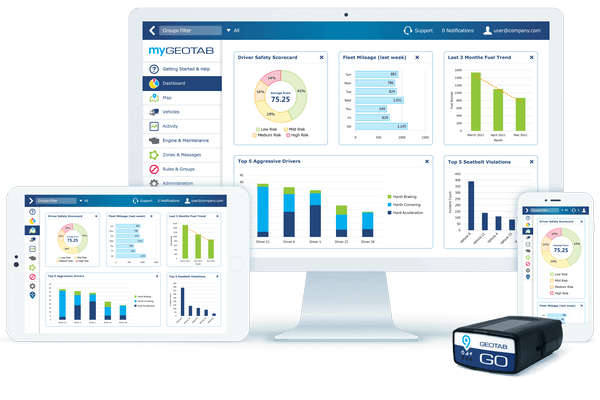
These violations typically occur when you are unable to present your ELD logs or are missing log data. If you are using an ELD and the data transfer fails, the Geotab Drive App can be a lifesaver. It will automatically retain the previous 14 days of logs to present during a roadside inspection.
Roadside Inspection Violations
These violations can easily be avoided when using the Geotab ELD. Geotab data can help the fleet manager see what drivers are reporting and can help spot any signs of tampering or falsification of records.
We Can Help
VLC has been assisting Fleet Managers and HR with tools and information to keep HOS violations reduced and eliminated. The Geotab device, when used correctly, will help you and your drivers stay on the road and avoid penalties. Call us for more information.
Vehicle Licensing Consultants
A Virtual Projects, LLC Company
Fleet & Driver Compliance…Fleet Tracking Software
530-384-3884
DQMConnect™, Gateway Connect
If you are responsible for the important job of organizing, maintaining, and managing your transportation assets, renewals, and customer files, you will recognize the huge savings that both DQM and GW Connect can bring to your business.
GW Connect
Gateway Connect is a flexible business operations tool that can be accessed from anywhere. It lets you instantly see the status of all company’s information… assets, renewals, and all related files. As the name implies, it offers automated connections to bring together all the data you need including DMV and Agency forms, which it will auto fill and allow you to review and edit as needed.
GW Connect helps you with document management with Drag & Drop functionality for ease of use and simplified organization. Our GW Connect software undergoes constant updates and improvement to stay current with the ever-changing requirements in the transportation industry.
DQM Connect
DQM Connect takes our software offerings to the next level. Driver qualification file software helps your company avoid messy, illegible, and incomplete data. DQM Connect guides your drivers through the online application process with our Smart eApplication, streamlines your onboarding, and alerts you to a completed and submitted application.
All the information is electronically stored and organized. Anything missing is flagged for admin review. All information is securely stored. Once you have been through the process just once, you will realize the benefits of DQM Connect.
You asked…we listened. Designed with your input and accessible online, anytime, anywhere!
Vehicle Licensing Consultants
A Virtual Projects, LLC Company
Fleet & Driver Compliance…Fleet Tracking Software
530-384-3884
Fleet Compliance
What Are the Most Important Features in Fleet Dispatch Software?
Fleet dispatch software is nothing new in the world of trucking – but the state of the art keeps advancing. That software package from a decade ago might be functional, but it’s lacking many of the innovations that have arrived in recent years. Numerous features are now available which can substantially improve the efficiency and productivity of your operation, making it easy to see a huge return on your upgrade investment.
If it’s been a few years since you last looked into fleet dispatch software options and features, here are just a few recent innovations that could bring big returns!
Six Must-Have Features in Modern Fleet Dispatch Software
1 – Cloud-based anywhere access
For decades, fleet software was tied to individual computers, or even to centralized servers within a building. That was fine at the time since there weren’t other options. Today, however, you need fleet software that can be accessed from anywhere, and from any device. That’s why nearly all modern dispatch software solutions are cloud-based, with interfaces that adapt depending on the device accessing them.
That way you and your drivers have complete access to information from anywhere, without ever needing to ‘phone home’ to someone sitting at a specific computer.
2 – Smart route optimization and order batching
Route optimization has come a long way since the days of in-cab GPS units. Today’s dispatch software can optimize routes based on a huge number of factors, from basic “shortest route” routing to more complicated schemes based on fuel usage or avoiding certain traffic situations such as making too many left turns.
On top of that, routing software can now optimize across numerous potential routes at the same time – such as taking large orders and finding the optimal way to batch them and get them all to their destination in the shortest possible time.
3 – AI-driven automated scheduling
When a customer comes in with a rush job or pays extra for “48-hour” delivery or similar services, a lot of moving parts need to come together in a very short period. AI-driven systems can take much of this burden off human dispatchers. They can monitor stock levels, know the locations of all nearby drivers and other transportation options, and start optimizing for a fast delivery almost instantly.
This can be especially critical in ‘white glove’ situations where the customer is expecting the shipment to be delivered directly to their door. These systems can make smart decisions about how to reduce the extra costs involved while seeing the delivery completed.
4 – Full integrations with other database systems
Do you still need to access multiple systems to get your job done? For example, many companies still have separate Customer Relationship Management (CRM), driver management, stocking, and dispatch/routing software. This can make day-to-day operations a real hassle.
Today’s fleet dispatch software can tie all these software functions and databases together into a single application. This makes management easier, but it also makes life better for your clients and customers as well – such as having instant access to a customer’s shipping history at the same time your arrangement for shipments.
5 – Deep real-time visibility
Sure, you can probably track where all your vehicles are at all times, but modern software options can go much further than that. You can track vehicles’ locations, speed, fuel consumption, or even monitor their adherence to rules of the road. Likewise, you can monitor stocking in real-time, as well as keeping up with other logistical issues that crop up during deliveries.
A great fleet dispatch software package gives you more real-time oversight of your entire operation than ever before – and usually all in the same application window.
This can also extend to real-time alerts. You can set up custom alerts to notify you of virtually any situation you want, allowing you to respond more quickly than if you were having to track all the variables yourself.
6 – Data analytics
The data generated during each run doesn’t simply vanish – it goes into databases for storage and analysis. In many cases, this is where the true benefit of software upgrades can come from. You can analyze performance across numerous variables instantly, making it easier to judge everything from the driving record of individual drivers, to how effectively your warehouses are managing their stock.
Over time, this data can be leveraged to make extremely accurate future forecasts based on past history. These can make budgeting and hiring decisions far easier, for example, by giving you a solid data-based foundation for making choices.
Upgrade Your Operations With VLC
For almost thirty years, Vehicle Licensing Consultants have been leaders in the fleet management industry. We have thousands of satisfied customers who’ve benefited from our consulting and software options. If you want to quickly increase productivity in your fleet operations, click here to learn more.
Fleet Management
The Most Important Considerations When Choosing a Fleet Management Solution
For people managing shipping operations and other commercial vehicle fleets, the right fleet management solution can be one of your most important operational tools. There are numerous options and fleet management software products on the market, and while many are excellent, not every solution is right for every challenge.
It’s not a question of finding the best fleet management solution, but rather finding the best solution for your particular needs.
So, what factors should you consider? Based on our decades of experience helping commercial fleets achieve maximum optimization, these are the areas we suggest fleet managers focus on when choosing between management solutions.
Four Critical Factors to Consider When Researching Fleet Management Solutions
1 – Your own pain points
More than anything else, the fleet management software solution you choose should address the problems that you are having in day-to-day operations. At first, pass, don’t worry about extra features or added bells and whistles. Think about the areas that cause you pain in your own management and look for solutions that will address those pain points first and foremost.
2 – A well-chosen feature set that reduces complexity
Another common mistake we often see is fleets choosing management solutions that are packed full of features – including features they may not ever use. Besides typically adding to the costs of these software packages, it also adds complexity and difficulty to their operation. A good fleet management package should be as easy to use as possible, to reduce training costs, and streamline day-to-day operation.
Plus, the best software options are modular. If there’s a particular feature you might need someday, just wait. You can probably add it later when the time comes.
3 – Scalability
Sure, that software package you’re looking at is sufficient for your needs today, but how long will that last? Look at your rates of business growth, as well as your overall goals for your business. Choose a management solution that will be able to grow with you and accommodate your likely situation at least five years down the line.
4 – Stability and guaranteed customer support
Finally, remember that you’ll undoubtedly need support from your software vendor. You want a company that provides robust customer service – and will also still be there when you need them. Solutions from a company that’s been in business for decades are a good idea since the vendor will likely stay in business.
Vehicle Licensing Consultants
VLC offers robust fleet management solutions for operations of any size! Click here to learn more about our products and services.